

Coffee Brewing Equipment for Home Use — Where Do You Even Start?
The best coffee brewing equipment for home use depends on what kind of cup you want — strong and bold, smooth and easy, or café-style espresso. Each result needs a different tool, and none of them need to be expensive.
So you want to brew better coffee at home. Maybe you're tired of instant. Maybe you had a cup somewhere that made you realise what coffee is actually supposed to taste like. Either way — good decision.
Here's the thing though: the moment you start looking at equipment, it gets overwhelming fast. Moka pots, pour-overs, French presses, espresso machines... all of them claim to make "the best" cup. None of them are lying. They just make different cups.
We've been selling coffee brewing equipment in India since 2002. This is the guide we wish existed when people first walk in asking where to start.
First, understand what your tools are actually doing
Every brewing method does one job: moving hot water through ground coffee to pull out flavour. What changes between methods is how long the water stays in contact with the coffee, how hot it is, and whether there's any pressure involved.
Those three things — contact time, temperature, pressure — are what make a French press taste different from a moka pot, even if you use the exact same coffee beans.
Once you get that, choosing equipment becomes a lot simpler.
The French Press — Start Here If You're New

The French press is the easiest coffee brewing method for beginners because it requires no pressure, no technique, and no electricity — just hot water, ground coffee, and four minutes.
If someone tells you they want to start brewing at home and asks what to buy first, nine times out of ten the answer is a French press.
Here's why: it's forgiving. You add coarsely ground coffee, pour in hot water (let it cool for 30–45 seconds after boiling — around 92–94°C is ideal), wait four minutes, press the plunger down slowly, and pour. That's genuinely it.
The cup you get is rich and full-bodied. Because there's no paper filter involved, the natural oils from the coffee stay in your cup — which gives it a texture and depth that you don't get from other filter methods.
A few things to get right:
- Use a coarse grind. Think coarse sea salt. Too fine and the grounds sneak through the mesh and make your cup muddy.
- Don't skip the 4-minute wait. Under-steep and it tastes weak and flat.
- Pour it out completely once it's done — coffee left sitting on the grounds keeps extracting and turns bitter.
No electricity needed. Works on any surface. Makes 1 to 4 cups depending on the size you choose. If you're in an office, traveling, or just don't want another appliance to plug in — this is your tool.
A 350ml French press is a good starting size for one person. If you're brewing for two, go straight to the 600ml or 1L version.
The Moka Pot — For Anyone Who Likes It Strong


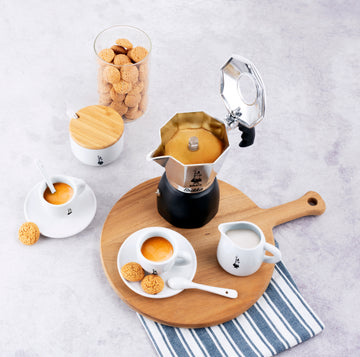
The moka pot is the best stovetop coffee brewing method for strong coffee — it uses steam pressure to produce a bold, concentrated cup that sits closer to espresso than anything else you can make on a gas stove.
If you grew up drinking South Indian filter coffee or you just like your cup bold and punchy, the moka pot will feel like home.
It sits on your gas stove, uses steam pressure to push water up through ground coffee, and produces a small, dense, intensely flavoured brew. It's not technically espresso (real espresso needs 9 bar of pressure; a moka pot works at around 1–2 bar), but it's the closest you'll get without an espresso machine.
We carry Pedrini moka pots — an Italian brand with decades of manufacturing heritage. The build quality is serious: heavy-gauge aluminium, a precise valve mechanism, and a design that distributes heat evenly. This matters more than it sounds. Cheaper generic moka pots use thinner metal and cut-rate valves that produce inconsistent pressure — and inconsistent pressure means inconsistent coffee.
How to brew correctly:
- Fill the bottom chamber with hot water — not cold. Up to the safety valve, no higher.
- Fill the filter basket with medium-fine ground coffee. Level it off. Don't press it down.
- Screw the top on firmly and place it on medium-low heat.
- The moment you hear a gurgling sound, take it off the heat. Done.
That gurgling means the water has passed through. Every second it stays on the stove after that, the brew scorches.
Moka pot “cups” are small servings of about 45 ml each.
- 2 cup ≈ 90 ml
- 3 cup ≈ 135 ml
- 6 cup ≈ 270 ml
A 3-cup moka pot makes roughly one standard Indian chai-glass worth of strong coffee. For most home setups, it is the right starting point.
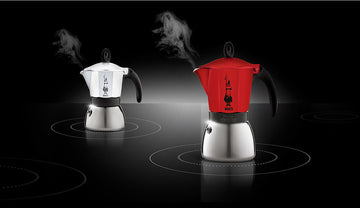
Works on gas stoves. Not compatible with standard induction cooktops unless you get a stainless steel induction-ready version, which we also offer, worth considering if that’s your setup.
Pour-Over — For the Curious and the Craft-Minded

Pour-over is the best brewing method for tasting the true character of a coffee bean — its origin, roast level, and natural flavour notes come through more clearly than in any other home brewing method.
Pour-over is where coffee gets genuinely interesting. You pour hot water slowly and in circles over ground coffee sitting in a filter, and gravity does the rest. It sounds simple. The results can be remarkable.
What pour-over does that no other method does as well: it shows you exactly what's in your coffee. The origin, the roast level, the subtleties. If you want to taste the difference between beans from Coorg and beans from Araku Valley, brew them both as pour-overs. You'll taste a difference. Brew them in a French press and the gap narrows considerably.
This is the method for someone who is genuinely curious about coffee — who wants to understand it, experiment with it, and get better at it over time.
It does require a bit more attention. Water temperature matters (90–96°C depending on how light or dark the roast is). Pouring technique matters. Grind consistency matters a lot — which is why a good burr grinder becomes important if pour-over becomes your method.
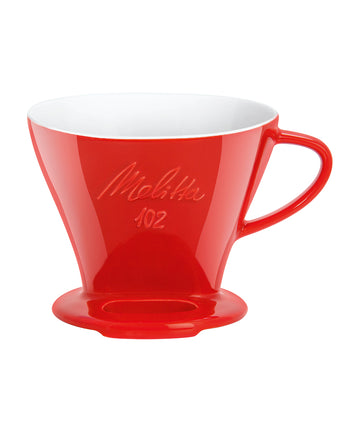
Start with a simple dripper and paper filters. Once you've brewed twenty or thirty cups and understand how variables affect your cup, you'll know exactly what to upgrade next.
Espresso Machines — When You're Ready to Go Further
An espresso machine is the right choice for home brewing when you want café-style drinks — lattes, cappuccinos, flat whites — and are willing to invest in both the machine and a quality grinder.
Espresso machines are in a different category — both in terms of investment and in terms of what they demand from you.
A proper espresso machine pumps water through finely ground, tightly packed coffee at 9 bar of pressure in about 25–30 seconds. The result is a 25–30ml shot with a layer of crema on top, intensely flavoured and layered. Everything café-based — lattes, cappuccinos, flat whites — starts here.
Two types for home use:
Semi-automatic machines give you control over every variable. You grind, dose, tamp, and pull the shot yourself. There's a learning curve. The reward is café-quality espresso when you get it right. We carry machines from Ariete — Italian engineering at a realistic home-use price point.
Super-automatic machines grind, dose, tamp, and brew at the press of a button. Consistent every time, minimal effort. Nivona makes some of the best super-automatics available — German engineering, precise temperature control, and machines that last. These make sense for households where multiple people drink espresso daily.
One thing nobody tells you enough: your grinder matters as much as your machine. A great machine with a bad grinder makes mediocre espresso. A modest machine with a good burr grinder performs significantly better than the specs suggest. If you're buying an espresso machine, budget for a grinder too.
Hard water note for Indian cities: Espresso machines are sensitive to scale build-up. Most Indian municipal water is hard — high in calcium and magnesium. Use filtered water and descale every 2–3 months. In cities like Delhi, Mumbai, or Ahmedabad where water hardness is particularly high, do it monthly. Machines with automatic descaling reminders make this much easier to stay on top of.
Quick Comparison — Which Method Is Right for You?
| Method | Strength | Effort | Best For | Price Range |
|---|---|---|---|---|
| French Press | Smooth, balanced | Low | Beginners, daily brewing | ₹1,500–₹4,000 |
| Moka Pot | Strong, bold | Low–Medium | Strong coffee lovers, gas stove users | ₹2,000–₹5,000 |
| Pour-Over | Clean, nuanced | Medium | Coffee curious, flavour explorers | ₹1,500–₹6,000 |
| Espresso Machine | Intense, café-style | Medium–High | Latte/cappuccino drinkers | ₹15,000–₹80,000+ |
Still not sure? Start with the moka pot or the French press. Both make genuinely good coffee, both cost under ₹3,000 for a quality version, and both will teach you what you actually like — which makes every decision after it easier.
A Few Questions We Hear Often
Do I need expensive equipment to make good coffee at home? No. Fresh beans ground just before brewing will do more for your cup than upgrading from a ₹3,000 moka pot to a ₹30,000 espresso machine. Equipment matters — but freshness matters more.
What's the difference between a moka pot and an espresso machine? Pressure, mostly. A moka pot uses 1–2 bar of steam pressure from your stove. An espresso machine uses a pump to generate 9 bar. The moka pot makes strong, concentrated coffee. The espresso machine makes true espresso with crema — the base for milk drinks.
Why does my moka pot taste bitter? Usually one of these: heat too high, left on the stove after the gurgling started, grind too fine, or cold water in the bottom chamber. Try medium-low heat, hot water to start, and pull it off the moment you hear the gurgle.
Can I use a moka pot on induction? Aluminium moka pots don't work on induction. You'll need a stainless steel induction-compatible version — ask us and we'll point you to the right one.
What grind for a French press? Coarse. Like coarse sea salt. Fine grind turns your cup into a muddy, over-extracted mess.
We've been at this since 2002. Every product we carry has been chosen for build quality, brand heritage, and real brewing performance — not price.
If you're starting out, our moka pots and French presses are the most reliable first step for home brewing.